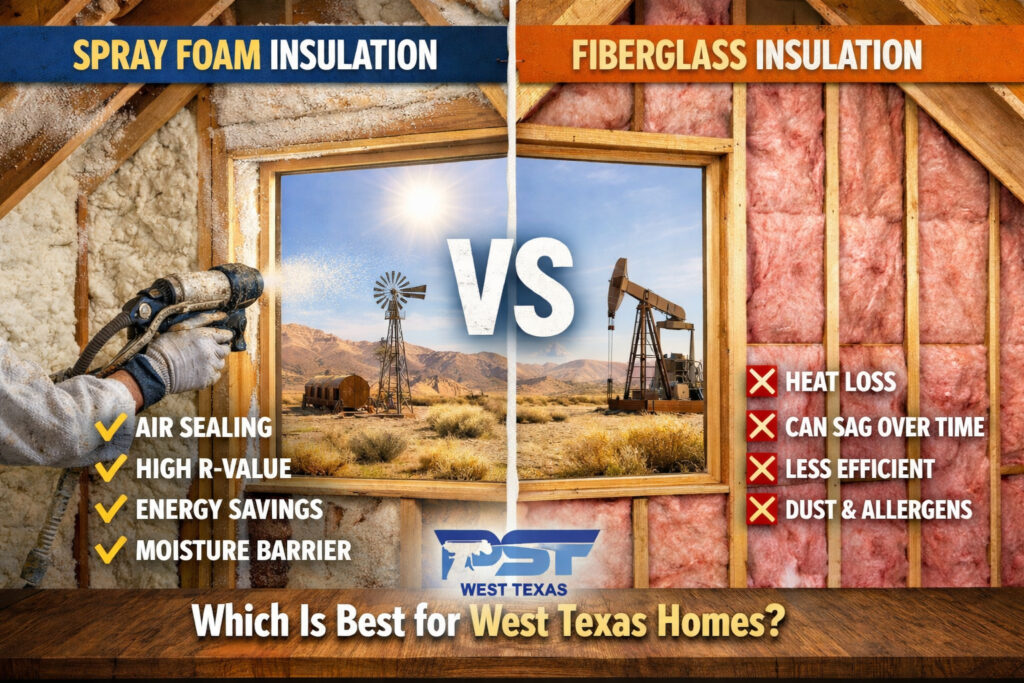
When choosing insulation for a home in West Texas, the debate often comes down to spray foam insulation vs fiberglass insulation. While both options are commonly used, the extreme climate conditions in West Texas make this decision especially important.
Understanding the West Texas Climate
Homes in West Texas face:
- Extreme summer heat
- High winds and dust
- Large temperature swings
- Rising energy costs
Insulation must do more than slow heat transfer—it must seal the home.
Spray Foam Insulation Advantages
Spray foam insulation expands on application, sealing gaps, cracks, and penetrations. This air-tight seal dramatically reduces air leakage, which is one of the biggest causes of energy loss.
Benefits include:
- Higher R-value per inch
- Superior air sealing
- Moisture resistance
- Reduced dust and allergens
- Long-term durability
Fiberglass Insulation Limitations
Fiberglass insulation slows heat transfer but does not stop air movement. Over time, fiberglass can sag, compress, and lose effectiveness—especially in hot attic spaces.
Which Is Better for West Texas Homes?
For most homes, spray foam insulation delivers better comfort, efficiency, and long-term savings. Fiberglass may cost less upfront, but spray foam often pays for itself through reduced utility bills.
Performance Spray Foam of West Texas helps homeowners select the best insulation based on their home’s design and budget.
#SprayFoamInsulation #FiberglassInsulation #WestTexasHomes #EnergyEfficientHomes